The phone rang in the flat just as Oliver Whitmore stood over the stove. A sizzling omelette filled the kitchen with the scent of butter and chives. Wiping his hands on a tea towel, he glanced at the unfamiliar number with irritation.
«Hello?» he answered curtly, keeping one eye on the pan.
«Mr. Whitmore, this is your family solicitor. Youll need to come in tomorrow morning. Theres a matter of inheritancedocuments to sign.»
Oliver frowned. His parents were alive and wellwho could have left him anything? He didnt ask. Just nodded silently, as if the man could see him, and hung up.
The next morning was damp, the sky thick with mist. As he drove through London, his mild bewilderment twisted into annoyance. The solicitor was waiting at the office door.
«Come in, Oliver. I know this must seem odd. But if it were straightforward, I wouldnt have called you in on a weekend.»
The office was eerily quiet, the usual hum of clerks and typists absent. Only the creak of the old wooden floor broke the silence as Oliver took his seat.
«This concerns your uncleHenry Caldwell.»
«I dont have an uncle named Henry,» Oliver said flatly.
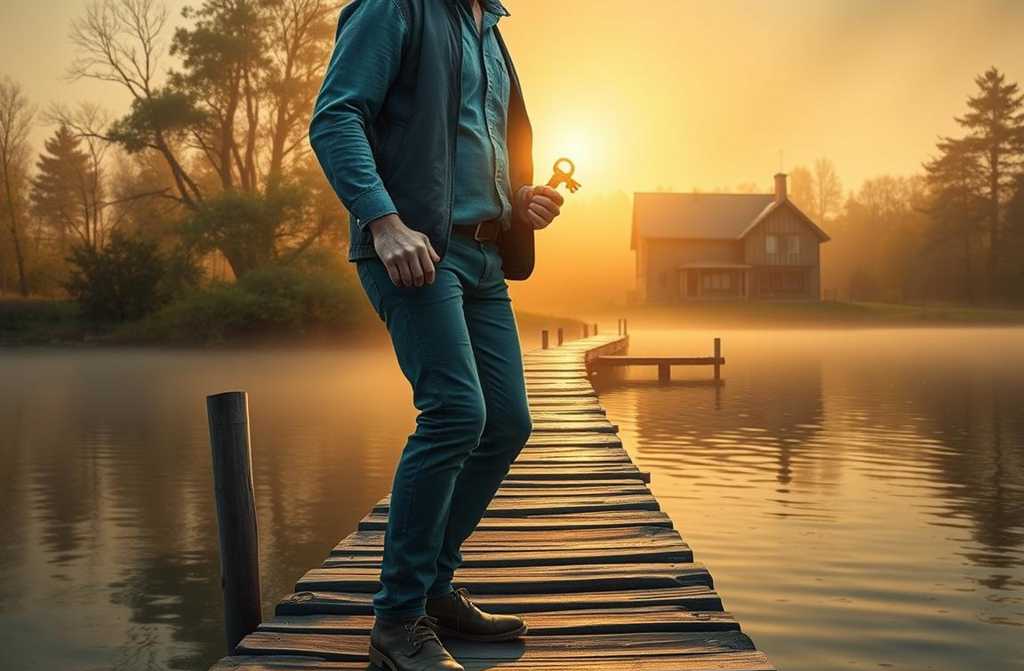
«Nevertheless, hes left you everything.» The solicitor slid an old key, a yellowed map, and a slip of paper across the desk. «A house on the water. Its yours now.»
«Youre joking.»
«It stands in the middle of Lake Thirlmere, in the Lake District.»
Oliver picked up the key. It was weighty, the metal worn with age. Hed never heard of the man, nor the place. Yet something in him stirredthat reckless spark of curiosity.
An hour later, his rucksack held a jumper, a flask of tea, and a sandwich. The satnav claimed the lake was barely an hour from his flat. How had he never heard of it?
When the road ended, the water stretched before himdark, still, like polished glass. And in its centre, a house loomed, vast and shadowed, as though rooted in the depths.
Elderly men sat outside a nearby pub, nursing pints. Oliver approached.
«Excuse methat house on the lake. Who lived there?»
One man set down his glass with deliberate slowness.
«We dont speak of that place. Dont go near it. Shouldve been torn down years ago.»
«But someone must have lived there.»
«Never saw a soul come or go. Only heard boats at night. Supplies deliveredbut no one knows by whom. And we dont ask.»
At the jetty, a faded sign read «Maggies Boats.» Inside, a weary-eyed woman eyed him warily.
«I need a boat to that house,» Oliver said, holding up the key. «Ive inherited it.»
«No one goes there,» she replied sharply. «Frightens folk. Frightens me.»
But Oliver pressed until she relented.
«Fine. Ill take you. But I wont wait. Be back tomorrow.»
The house rose from the water like a relic of another time. The wooden dock groaned underfoot as Maggie tied up the boat.
«Here we are,» she muttered.
Oliver stepped onto the rotting planks, but before he could thank her, the engine sputtered to life.
«Good luck. Hope I see you tomorrow,» she called, vanishing into the fog.
Now he was alone.
The key turned with ease. A dull click, then the door groaned open.
Inside, the air was stale yet oddly crisp. Sunlight filtered through heavy drapes, illuminating walls lined with portraits. One stood outa man by the lakeshore, the house looming behind him. The inscription read: «Henry Caldwell, 1964.»
The library shelves bore books filled with handwritten notes. A study held a telescope and stacks of journalsweather records, observations, the last entry dated mere weeks ago.
«What was he watching?» Oliver murmured.
The bedroom held a dozen stopped clocks. On the dresser, a locket. Inside, a babys photo labelled: «Whitmore.»
«Was he watching me? My family?»
A note on the mirror read: «Time unearths what was buried.»
The attic was crammed with boxes of newspaper clippings. One, circled in red ink: «Boy from York goes missing. Found unharmed.» The year1997. Olivers blood ran cold. That was him.
In the dining room, a single chair was pulled out. On it lay his school photograph.
«This isnt just strange anymore,» he whispered, his head spinning.
He ate tinned beans from the pantry, then retreated to a guest room. The sheets were crisp, untouched. Moonlight shimmered on the lake, and the house seemed to breathe with the waters rhythm.
Sleep wouldnt come. Too many questions. Who was Henry Caldwell? Why had no one spoken of him? Why had his parents never mentioned an uncle? And why this eerie fixation on him?
When exhaustion finally pulled him under, the house settled into true darknesswhere floorboards groaned like footsteps, and shadows pressed close.
A metallic clang shattered the silence. Oliver bolted upright. Another sounda door slamming below. He grabbed his phone. No signal. Only his own wide-eyed reflection stared back.
Flashlight in hand, he crept into the hallway.
Shadows deepened, almost solid. The library books sat slightly askew, as if recently handled. The study door hung open. A cold draft seeped from behind a tapestry he hadnt noticed before.
He tugged it asidean iron door stood there.
«Not this,» he breathed, but his fingers brushed the icy handle.
The door gave with a shudder. Beyond it, a spiral staircase plunged beneath the house, beneath the lake. The air grew damp, thick with salt and rust and something older than memory.
Below stretched a corridor of filing cabinets. Labels read: «Genealogy,» «Correspondence,» «Expeditions.»
One drawer was marked: «Whitmore.»
Oliver pulled it open. Letters. All addressed to his father.
«I tried. Why wont you answer? This matters. For Olivers sake»
«So he didnt vanish. He wrote. He wanted to know me,» Oliver whispered.
At the corridors end stood another door: «Authorised Personnel Only. Caldwell Archives.» No handlejust a palm scanner. A note beside it read: «For Oliver Whitmore. Only him.»
He pressed his hand.
Click. Light flooded the room. A projector whirred to life, casting a mans silhouette onto the wall.
Grey-haired, weary-eyed. He looked straight at Oliver.
«Hello, Oliver. If youre seeing this, Im gone.»
The man introduced himself: Henry Caldwell.
«I am your true father. You shouldnt have learned this way, but your mother and I made grave mistakes. We were scientists, obsessed with saving the world. She died bringing you into it. And II was afraid. Afraid of what I might become. So I gave you to my brother. He raised you well. But I never stopped watching. From here. From afar.»
Oliver sank onto a bench, numb.
«It was you all this time»
The recording trembled:
«I feared ruining you, but you grew strong, kindbetter than Id dared hope. This house is yours now, as amends. Forgive mefor silence, for cowardice, for being near yet never there.»
The image faded.
Oliver didnt know how long he sat in the dark. Eventually, he climbed back upstairs. At dawn, Maggie waited at the jetty.
«You all right?» she asked, eyeing him.
«I am now,» he said softly. «I just needed to understand.»
He went home. His parents listened in silence, then embraced him.
«Forgive us,» his mother whispered. «We thought it best.»
«Thank you,» he said. «I know it wasnt easy.»
That night, Oliver lay in bed. The ceiling was the same. Everything else had changed.
Weeks later, he returned to the lake. Not to live there, but to restore it. The house became the Caldwell Centre for Environmental Studies. Childrens laughter rang through its halls. Neighbours visited without fear. The house was no longer a vault of secrets.
It was alive again.